- Home
- About
- Curriculum
- Statutory
- News & Events
- Parents & Carers
- Activities to do at Home
- Opportunities
- Contact


The Early Years Foundation Stage (EYFS) currently consists of one class group; Foundation 1. In Foundation 1 there is currently one Nursery aged child, two Reception aged children and six pupils in KS1. The EYFS curriculum is taught to all pupils in Foundation 1. In Foundation 2 there is one Reception aged child.
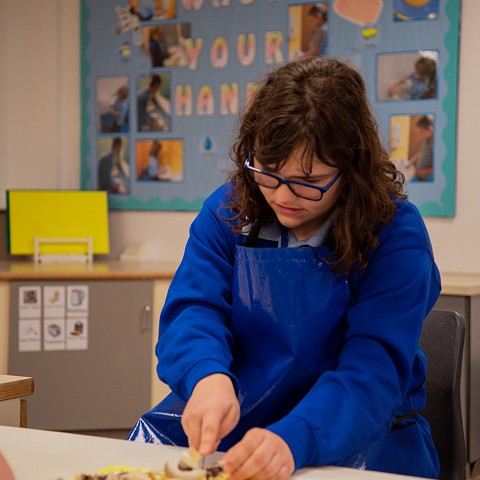
In EYFS, children take part in adult-directed and child- initiated learning (CIL) activities including Food Technology, stories, Soft Play, Sensory room and visiting the Library. Pupils are taught and encouraged to make choices of their own during CIL. The children use photos and activity cues to help them to understand and begin to anticipate the different activities that are made available to them. There is symbols available to support understanding of key vocabulary in each activity. A member of class staff is present within each of the chosen areas to support, model and interact with the pupils and maximise learning opportunities. The CIL choices are organised into the Prime and Specific areas of learning as outlined within the EYFS Curriculum. This means the pupils have access to a broad and balanced curriculum.
Intent
The EYFS environment is set up with the intention for pupils to have access to resources that meet their developmental needs and spaces are dedicated to enable pupils to become familiar with routines and expectations.
Implementation
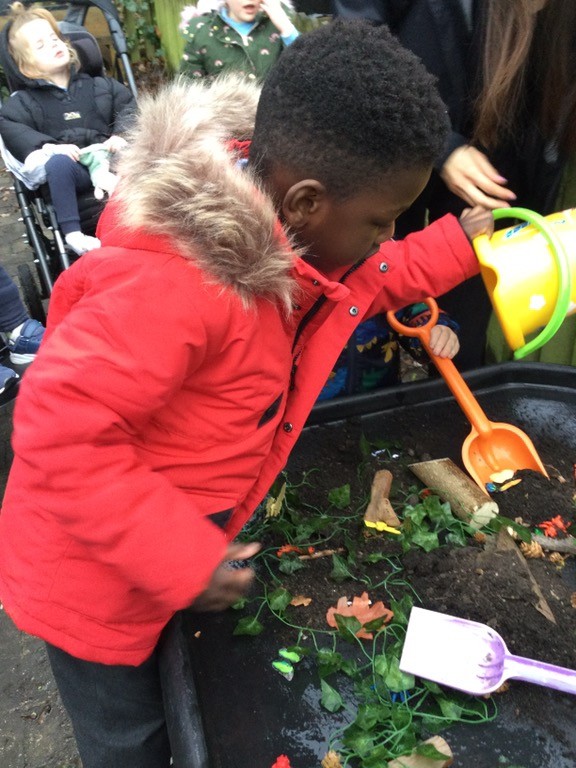
Pupil confidence and ability to negotiate indoor and outdoor spaces, to avoid obstacles and to notice change is encouraged with resources positioned centrally as well as to the perimeter of learning spaces, such as tuff trays and raised beds which offer open-ended play opportunities.
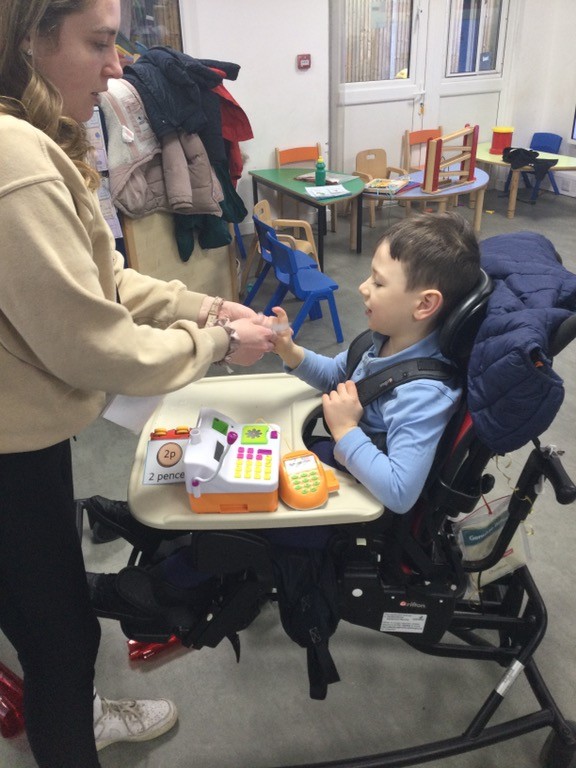
Through modelling to shape learning, manipulation of items and trial and error, pupils’ play is scaffolded by the supporting adult, enabling the consolidation and refinement of skills. The free-flow nature of child-initiated play in EYFS promotes an ethos that all areas of learning and development are of value and linked.
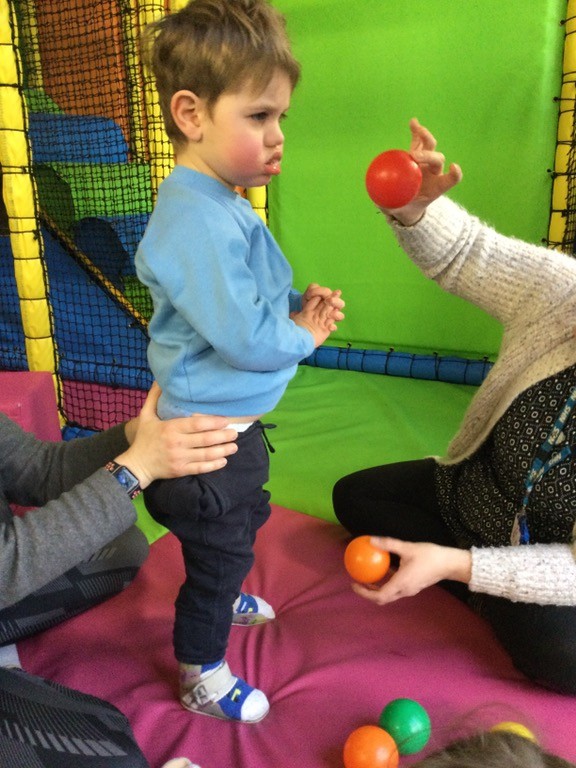
In the context of the Dell, Soft Play and Adventure Playground environments, pupils are provided with opportunities to safely manage risk, problem-solve, test their own abilities and to challenge themselves in a stimulating, enabling environment.
Pupils are supported through play and positive interactions to build trusting and respectful relationships with the adults in class. Throughout child-initiated and adult-led learning, pupils may return to familiar adults for emotional refuelling, which may present as being a safe base from which to further investigate an area of curiosity. Pupils’ emotional development is further nurtured through close teamwork of the class staff, delivering consistent boundaries and a fostering a shared ethos of expectation in relation to what each pupil can achieve within the context of their own ability.
Impact
The environment impacts pupils by providing meaningful opportunities for communication and the development of social skills. Pupils develop preferences and make choices to express them. They develop self-exploration skills and learn how to use equipment and resources through adult modelling and child initiated opportunities. Pupils learn to transition around the classroom and move between the areas for learning, snack time and circle and join in with daily routines.
Intent
The intent is for planning to provide child-initiated activities for pupils to become immersed in, across the curriculum headings and the wide variety of topics that are set out on the year plan. The planning sets out how the teacher intends to support pupils to make progress throughout the school year by focussing on individual learning objectives through a child initiated approach.
Implementation
Weekly specialist subjects; Dance, PE, Music, Science, Music Therapy and Swimming are taught by specialist teachers. The rest of the timetable covers all the Prime and Specific areas of EYFS, taught by the Foundation Stage teacher.
Lessons in the Adventure Playground, Soft Play, EYFS playground and the Dell hone Physical Development skills. Opportunities for Communication and Language development are provided for with close liaison between Foundation Stage class teachers and the Speech and Language team. This partnership generates meaningful individual communication learning objectives for each pupil which are embedded across the curriculum. Personal, Social and Emotional development skills are practised across all areas throughout the school day, such as toileting, lunchtimes, play times, child-initiated activities, teeth brushing and transitions. Pupils learn about aspects of self-regulation and building relationships with others.
Three Literacy lessons, three Maths lessons, two Understanding the World and two Expressive Art and Design lessons are taught each week. There is also a timetabled story session every day where pupils are exposed to a range of traditional tales and stories of different genres. The stories are told through a multi-sensory approach.
Half term plans are written by the class teachers to inform how pupil objectives will be achieved through the intent, implementation, and impact of lessons. Child-initiated activities are planned to complement the Early Learning Goals and to promote learning behaviours and communication. Resources are inspired by the topics from the year plan.
Impact
Through well thought out yearly, half termly and daily planning, pupils make outstanding progress from their individual starting points by the end of EYFS. Throughout their time in EYFS they learn appropriate learning behaviours and early communication skills as well as touching on other areas of early individual development. This can be seen through all areas of planning which is also reflected on regularly to adapt to the changing needs of the pupils.
Intent
Pupils are set five or six priority objectives each term with the intention to focus learning for each pupil within child initiated activities and focus and highlight individual development and progress.
Implementation
Due to the individual learning needs of pupils at Amwell View, pupils in EYFS are set five or six priority objectives every half term based around learning behaviours, characteristics of effective learning, communication and early Maths and Literacy skills. These objectives take into consideration the information from the Herts baseline, ELG baseline and any prior information from previous settings. The intent is for the objectives to be achieved throughout the child initiated and adult-led learning activities that are taught throughout the week.
Half term planning for EYFS embeds each individual learning objective so they are practised across the curriculum. Teaching Assistants are provided with each pupils’ priority objectives so they can refer to them in the learning activities and guide and model learning using the carefully considered resources to support achievement of these objectives.
Impact
The impact of the priority objectives is recorded at the end of every half term through videos, photos, and comments on Tapestry. They are shared with parents so they can see the progress their child is making each half term and have the opportunity to comment on the observation.
Priority objectives impact the pupils by providing meaningful steps for them to achieve and make progress in the context of their own ability. They support the focus of learning to develop key early skills in learning behaviours, communication skills and across all areas of EYFS. Pupils show expected progress throughout their time in EYFS through the effective setting of objectives that impacts their development.
Intent
Assessment is used formatively and summatively to record and review the progress of pupils. This reviewing ensures that pupils are being set appropriate objectives to support progress and to create next steps so pupils make expected progress.
Implementation
Assessment in EYFS follows the whole school assessment and reporting structure to measure progress, in addition to the statutory requirements set out in the Early Years Framework. Pupils work towards achieving the Early Learning Goals to develop their knowledge, understanding and skills to the best of their ability.
Pupils are baselined at the beginning of their first year in EYFS at Amwell View, using the Early Years Foundation Stage Profile (highlighted sheets) to identify their entry level of development against the Early Learning Goals. This occurs after six to eight weeks in the setting at Amwell View and termly throughout the academic year. The teacher adopts a best-fit judgement for how the child presents at that moment in time.
Within annual Education, Health and Care Plans (EHCPs) the teacher reviews long-term objectives set from the previous academic year, before setting new, teacher-generated objectives for the upcoming year. These long-term objectives are broken down into smaller, manageable steps throughout the year.
Half-termly new teacher-generated objectives are assessed and new ones set according to the needs of the individual pupil, taking into consideration their long-term objectives outlined in their most recent EHCP.
Ongoing, daily observations of pupil progress and achievements are recorded in the moment, using iPads and anecdotal recordings which are shared with parents via the online platform of Tapestry. Within Tapestry, formative assessments are made using flags and checkpoints to identify development across the seven areas of learning in the EYFS. The teacher will also identify the ‘next step’ the pupil needs to take to consolidate and extend their learning.
Information shared with parents at EHC meetings, parents’ evenings and weekly correspondence via email strengthen our partnership with parents and support learning at home.
Impact
The impact of assessment is that pupils make consistent progress in the context of their own ability. This progress is then recorded to inform future planning and outcome setting so pupils are always being set appropriate learning objectives where their can succeed and make progress within the context of their ability. They learn new skills within a range of context to contextualise them and then build on them.
Intent
The transition from EYFS to KS1 is intended to be gradual and support pupils to use new spaces around school, follow new routines and lesson structures and attend to different curriculum lessons. All staff plan to support this transition from the end of their time in EYFS to the beginning of September when they move to KS1.
Implementation
In KS1, pupils are introduced to new areas of the school, such as the Hatch and different outside spaces. As the year progresses, learning is extended to support the specific skills in each area and focus the learning.
Planning in KS1 includes new subjects, such as Religious Education, Geography and History. Previously learnt skills are transferred from familiar topics, such as Understanding the World from the EYFS curriculum. In KS1, the timetable includes a greater number of subjects, which means that planning is often structured to extend the pupils through meaningful interactions and resources, supported sensory breaks allow time for the pupils to reflect on experiences.
In KS1, pupils learn through a range of different activity styles to support the transition from EYFS. Building on pupils’ experience of child-initiated learning (CIL), lessons include a mixture of exploratory and adult led activities. Lessons are delivered in three parts with a starter and plenary as a class group in Circle, and smaller learning groups for the main.
When pupils transition from EYFS to KS1, Summer 2 learning objectives are repeated to confirm their consolidation. The following half term pupils are introduced to 16 new objectives across the curriculum that meets their individual development. These objectives become the main focus of learning for that pupil throughout the half term. This process ensures objectives from EYFS are contextualised.
Transition is supported with teacher observations of pupils alongside transition meetings to discuss learning, communication, pupil plans and profiles and anything other information. Teachers also plan joint learning sessions where appropriate so that pupils can spend time in new classrooms alongside new peers and adults. This supports a smooth transition between staff and supports the pupils to make sure they have everything in place to meet their needs.
Impact
Pupils adapt well to the new structures and environments in KS1 and continue to make expect progress. Pupils feel safe and are ready to learn as all their needs are met having a positive impact on their time in school. The slow transition of new routines and structure supports the pupils to get used to.
Funding for early years providers to support children with special education needs/disabilities.
It assists access to free early education places by supporting providers in making reasonable adjustments to their settings.
 |  |  |
 |  |
|