- Home
- About
- Curriculum
- Statutory
- News & Events
- Parents & Carers
- Activities to do at Home
- Opportunities
- Contact


At Amwell View school we believe that every pupil’s voice matters, and we want to represent the voice of our pupils through our curriculum and every day routines.
Over the course of every school day, we get to know our pupils’ likes, dislikes, wants and needs through learning each pupil's nuanced body language, facial expressions, vocalisations and expressive language. These observed behaviours are in line with those detailed in each stage of our Communication Framework, which we use to assess our pupils’ communication levels. For example, for pupils assessed at Level 1, we might see behaviours such as beginning to vocalise, head and body movements, startling to loud sounds and/or closing eyes to bright lights, but for pupils assessed at Level 3, we might see pupils learning to request objects or actions, beginning to sign or nod/shake their heads.
We often have to interpret these behaviours to support our children and young people to communicate their thoughts, feelings and opinions and we advocate on their behalf across the curriculum and throughout the school day.
We have developed a Pupil View form that we support our pupils to complete annually to reflect on their academic year at school. Pupils look at photos and videos of activities we have participated in across the year, and with the support of staff, participate in discussions to communicate about some of their liked activities, and some of their more disliked activities. We believe in exposing our pupils to a wide range of activities and experiences in a variety of contexts as it is imperative we understand not only what our pupils really like, but also what they are not keen on, not only to reinforce to our young people that we understand and recognise their opinions, but to inform further practice.
Other examples of how we obtain and infer the voices of our pupils consist of:
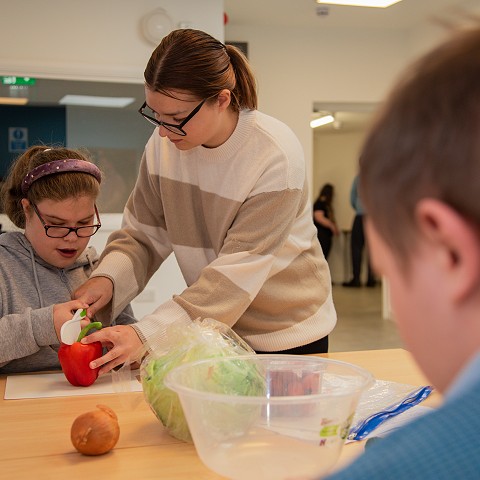
We are constantly developing how we obtain and interpret our pupils’ voices across the whole school, to meet the needs of our current cohort. We have started to run Pupil Voice sessions, which are pupil led, with the aim to communicate the voice of every pupil in the whole school, whilst also delivering meaningful activities and experiences for our pupils. The Upper and Lower School Leads visit each class termly, alongside pupil representatives from Lower and Upper school to engage with each pupil and give them a voice to share with the school. The leads and the representatives engage in pupil led activities and alongside class staff, interpret how the pupils feel about the activity. Our Pupil Voice sessions have been shared on our school Instagram page, and have been enjoyable and engaging for our pupils.
Instagram page: https://www.instagram.com/amwellviewschool/