- Home
- About
- Curriculum
- Statutory
- News & Events
- Parents & Carers
- Activities to do at Home
- Opportunities
- Contact


At Amwell View School, we aim to embed the teaching of Mathematics across the curriculum and throughout the school day. Pupils are provided with a variety of opportunities to learn functional Mathematics skills, taught through exciting topics and in different contexts within school and offsite.
Teachers set personalised EHCP and termly priority outcomes, which focus on the knowledge and skills that are considered meaningful to the pupil. In Early Years Foundation Stage (EYFS) we aim to develop positive attitudes and interests in Mathematics by providing frequent and varied opportunities. The curriculum includes opportunities for pupils to develop their spatial reasoning skills, problem solving skills and to develop a strong grounding in number through stories, songs and rhymes.
Pupils who are becoming fluent in the fundamentals of Mathematics are identified as high attainers. As in the National Curriculum 2014, teachers must ‘set high expectations for every pupil’ and ‘plan extension learning opportunities for pupils whose attainment is significantly above the expected standards’. Our policy for these pupils endeavours to ensure they can be appropriately and effectively provided for through the teaching and learning of Mathematics. Children that have been identified as high attainers will be working in or towards the Pre-Key stage standards.
Pupils, including those who have been identified as having Profound and Multiple Learning Disabilities (PMLD) and Multisensory Impairment (MSI), may require a multi-sensory approach to their learning. That means they need to have access to teaching methods, activities and resources that involve engaging more than one sense at a time. By involving the use of visual, auditory, olfactory, movement and tactile pathways, a multisensory approach can enhance memory and the ability to learn. The curriculum includes opportunities for pupils to develop attention, anticipation, responding and communicating, choice making.
Amwell View's Post-16 curriculum is designed to provide an emphasis on transferable skills which are used in future provision and adult life. This includes developing important life and social skills needed for becoming members of the community. Pupils utilise the school charity shop where they can practise work-related skills along with visiting local shops to practise money handling, shopping, road safety and travel training where appropriate.
We adopt a cross-curricular approach to the teaching and learning of Mathematics; through timetabled Mathematics lessons, as well as learning opportunities throughout the school day. This approach enables pupils to progress at their own pace as they master content and skills.
Our Mathematics curriculum includes a subject overview, offering a vast array of half-termly topics that teachers use to create stimulating and intriguing lessons that promote enthusiasm and curiosity towards learning. Teachers also use pupils’ interests and preferences to plan and deliver engaging learning opportunities. Through teaching Mathematics, pupils focus on all learning areas of our Pre-Mathematics curriculum.
Learning areas include:
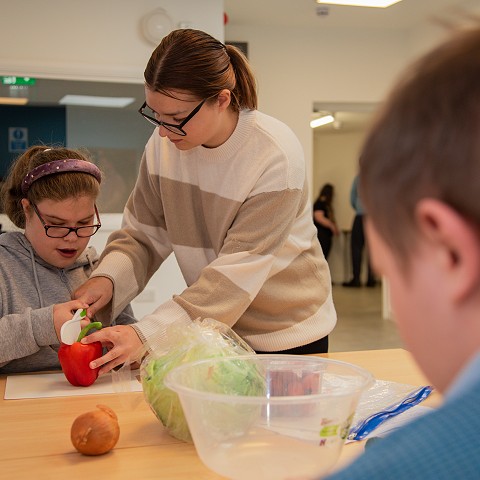
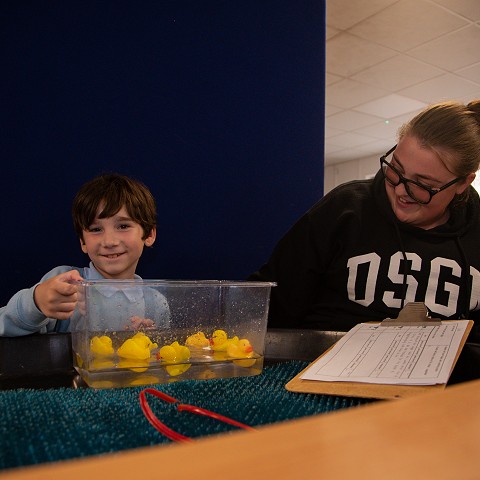
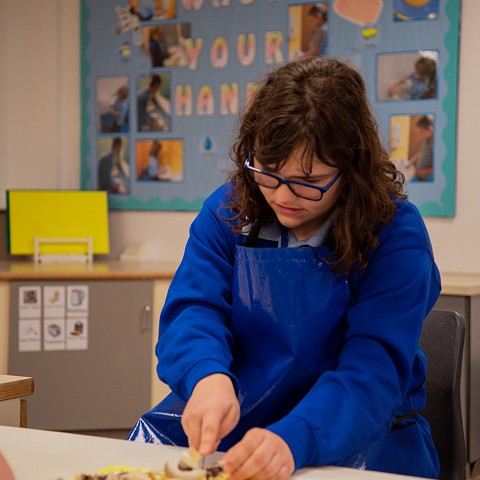
The Mathematics curriculum is delivered in a variety of ways, complementing the learning styles and abilities of each pupil. Pupils have access to a vast range of resources within school to broaden their experiences, as well as having the opportunity to learn in a variety contexts both within school and offsite. Mathematics is taught: in classrooms, the Dell, Food Technology, Soft Play, playgrounds, swimming pool, Sensory Room and fitness suite. This is replicated at the Tonwell Satellite Site, where the outside playground, nature area, Food Technology room and sports hall are all used to incorporate Maths activities. Teachers also plan off-site visits that support and develop each individual pupil’s Mathematical skills and understanding, including visits to: Amwell View Charity Shop, supermarkets, recycling locations and the local community.
In EYFS, learning is taught through child initiated learning (CIL) and through a targeted approach. CIL involves pupils making decisions about what they want to do, where, with whom, and what resources they will need. Pupils are given time to play, to explore and experiment with their ideas and knowledge whilst adults support and scaffold their learning. Pupils who have been identified as high attainers by class teachers, will begin to engage with some aspects of the KS1 National Curriculum and will be supported to become fluent in the fundamentals of Mathematics. Learning areas include:
Outcomes for pupils with PMLD and MSI are informed through a bespoke PMLD curriculum, informed by the Routes for Learning framework and are tailored to meet individual needs by class teachers.
Pupils experience the basic concepts of Mathematics, through a multi-sensory curriculum. Pupils will learn to gain and sustain attention, anticipate and respond to stimuli, and communicate through choice making. In Post-16, the learning focuses on consolidation and contextualisation of functional Mathematic skills. Pupils are given opportunities to practice these skills off-site and in the local community to prepare for transitions to new settings.
At Amwell View School, we adopt a cross-curricular approach to the teaching and learning of Mathematics; through timetabled Mathematics lessons as well as learning opportunities throughout the school day. This approach enables pupils to progress at their own pace as they master content and skills.
Our Mathematics curriculum includes a subject overview, offering a vast array of half-termly topics that teachers use to create stimulating and intriguing lessons that promote enthusiasm and curiosity towards learning. Teachers also use individual pupil’s interests and preferences to plan and deliver engaging learning opportunities. Through teaching Mathematics, pupils focus on all learning areas of our Pre-Mathematics curriculum. Learning areas include:
Pre-maths skills: cognition and learning skills of anticipation, curiosity, investigation, persistence, initiation, discovery.
Number skills: number place, number value, simple fractions, simple ratio and rates of change, simple addition, simple subtraction, simple multiplication and simple division.
Simple measurement and geometry: problem solving, weight, length, capacity, temperature, time, money, position, direction, shape properties.
The Mathematics curriculum is delivered in a variety of ways, complementing the learning styles and abilities of each pupil. Pupils have access to a vast range of resources within school to broaden their experiences, as well as having the opportunity to learn in a variety contexts both within school and offsite. Within Amwell View School, Mathematics is taught: in classrooms, the Dell, Food Technology, Soft Play, playgrounds, swimming pool, Sensory Room and fitness suites. Teachers also plan offsite visits that support and develop each individual pupil’s Mathematical skills and understanding, including visits to: Amwell View Charity Shop, supermarkets, recycling locations and the local community.
In EYFS, learning is taught through child initiated learning (CIL) and through a targeted approach. Within Amwell View School, CIL involves pupils making decisions about what they want to do, where, with whom, and what resources they will need. Pupils are given time to play, to explore and experiment with their ideas and knowledge whilst adults support and scaffold their learning.
Pupils who have been identified as high attainers by class teachers, will begin to engage with some aspects of the KS1 National Curriculum and will be supported to become fluent in the fundamentals of Mathematics. Learning areas include:
Number: count, read and write numbers in numerals and words, identify one more and one less, pictorial representations, read write and interpret mathematical equations involving operators and solve one step problems involving multiplication and division.
Geometry & Measurement: develop problem solving skills, recognise and know the value of different denominations of coins, measure and begin to record; lengths and heights, weight, capacity and time; compare and describe; mass, length, capacity, volume, and time.
Outcomes for pupils with PMLD and MSI are informed through Routes for Learning framework and are designed to individual needs by class teachers. Pupils experience the basic concepts of Mathematics, through a multi-sensory curriculum. Pupils will learn to gain and sustain attention, anticipate and respond to stimuli, and communicate through choice making.
In Post-16, the learning focuses on consolidation and contextualisation of functional Mathematic skills. Pupils are given opportunities to practice these skills off site and in the local community to prepare them for transition to new settings.
The impact of this can be evidenced in the pupils’ wellbeing and ability to express themselves, their thoughts, likes and dislikes. Pupils will develop their methods of communication through the use of concrete ways, such as real objects, towards the more abstract, such as symbols, signs and print e.g. numerals. It can also be seen in the increased autonomy and independence of the pupils as they gain and progress in their metacognitive skills.
The refined Mathematics overview has been designed to include fun, appealing themes that all pupils are able to access. The intended impact of this, is that pupils will be motivated to engage with their learning, with reduced support and show an increased ability to cope with challenge.
Pupils will demonstrate an ability to maintain, refine and generalise skills over time and in a range of contexts. For example, pupils will learn sorting and organising skills including readying themselves to learn by taking their chair to their learning table and identifying the equipment they need. Over time, the impact of this is that pupils will show a reduced need for support in completing familiar tasks. Pupils learn to generalise these skills and apply them to everyday situations. For example, pupils will learn to identify, collect and organise the equipment they need for a variety of activities in a range of contexts including learning off-site. Mathematics at Amwell View School strives to equip pupils with life-long skills that they are able to transfer into their life within the community. We aim to create a positive and confident culture around Mathematics; supporting pupils to have a strong exploratory impulse, to be resilient and to develop a lifelong love for learning.